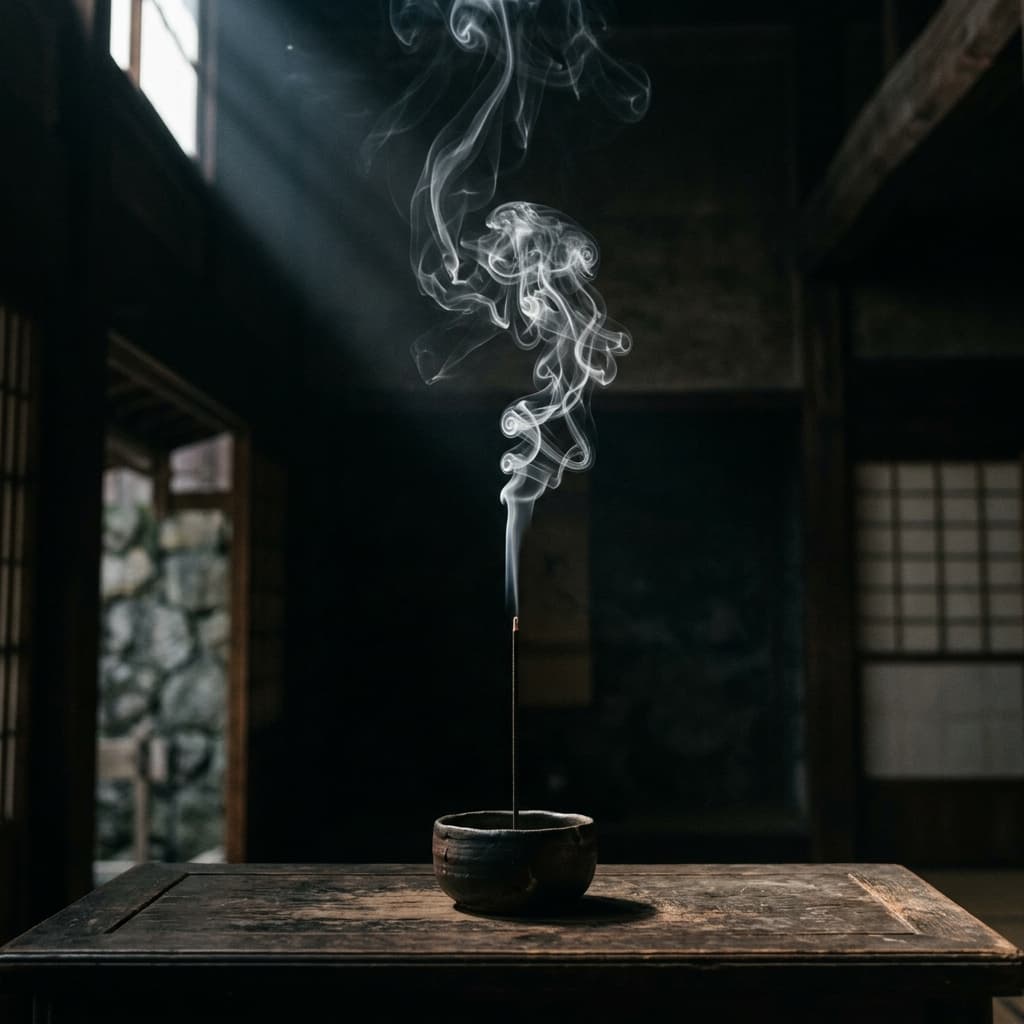
Inverted Dreams
Why we're addicted to danger and terrified of safety — a meditation on the Heart Sutra's deepest warning.
During meditation recently, a bolt of lightning crossed my mind. As a detached observer, I saw — with uncomfortable clarity — a fatally absurd bug that has been running inside my operating system for years:
For most of my life, I have been hypervigilant toward situations with nearly zero risk, yet drawn like a moth to situations of genuine danger.
Let me disassemble this bug.
The Inverted Algorithm
Think about it: I can lie awake at night agonizing over an email I haven't sent — a zero-stakes action with a failure probability so low it rounds to nothing. My heart rate spikes. My jaw clenches. The Protector fires every alarm.
Meanwhile, the truly dangerous moves — quitting a stable career, betting everything on a startup, trusting opaque financial partners — those decisions slid through my threat-detection system like air through a screen door. No alarm. No friction. Just the dopamine rush of action.
This is precisely what the Heart Sutra calls 颠倒梦想 (viparyāsa) — inverted dreams, perverted views. We mistake the safe for dangerous and the dangerous for safe. We see mirages and call them solid ground.
Why the System Inverts
The inversion isn't random. It's a feature — or more precisely, a legacy feature that outlived its context.
The dopamine trap: High-stakes gambles flood your system with neurochemical reward. The startup bet, the risky relationship, the big swing — they feel like aliveness. Your brain confuses intensity with importance.
The cortisol loop: Small, mundane actions — sending an email, asking for help, showing up consistently — produce none of that excitement. Worse, they require vulnerability. And vulnerability, to a CPTSD-conditioned nervous system, registers as mortal threat.
So the system inverts: it labels safe actions as dangerous (because they require openness) and dangerous actions as safe (because they come wrapped in adrenaline).
The Heart Sutra Diagnostic
The Heart Sutra's prescription is radical: 远离颠倒梦想 — distance yourself from inverted dreams.
In engineering terms: acknowledge that your sensor array is miscalibrated. The readings are real — the fear, the excitement, the urgency — but the labels are reversed.
The fix isn't to feel less. It's to re-label: - That anxiety before a simple email? Label it: "My system is confusing vulnerability with danger. The actual risk is near zero." - That rush before a reckless decision? Label it: "My system is confusing adrenaline with safety. The actual risk is high."
Toward Fearless Ordinarily
The deepest courage isn't charging into battle. It's doing the dishes without background dread. It's sending the message without rehearsing catastrophe. It's sitting in a quiet room and not reaching for your phone.
The Heart Sutra promises: when you truly distance yourself from inverted dreams, you arrive at 究竟涅槃 — ultimate peace. Not bliss. Not ecstasy. Just the absence of the unnecessary alarm bells.
The OS isn't broken. The labels just need swapping. And that work — quiet, unglamorous, daily — is the real reboot.
Chian March 2026, Patan, Nepal
Explore the Knowledge Base