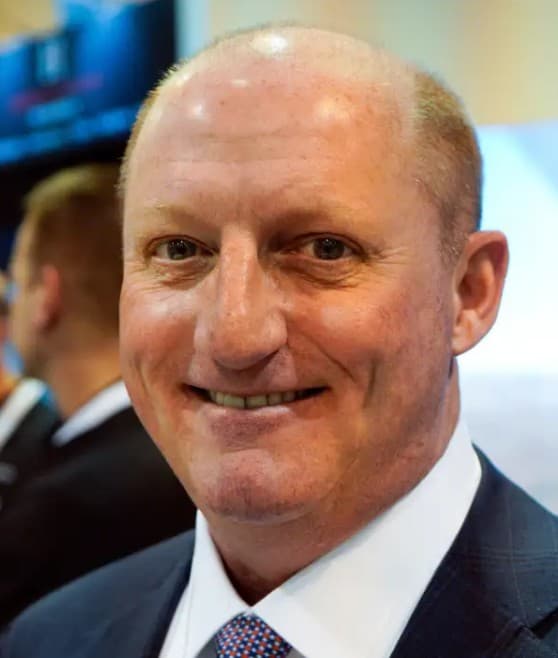
Greg Abel
Vice Chairman of Non-Insurance Operations / CEO-Designate
Buffett's designated successor as CEO of Berkshire Hathaway.
Biography
Greg Abel (born 1962) is Warren Buffett's successor as CEO of Berkshire Hathaway. A Canadian, born and raised in Edmonton, Alberta — he still plays hockey, Buffett noted in the 2023 letter — Abel trained as an accountant at the University of Alberta and began his career at PricewaterhouseCoopers. He joined CalEnergy, a small geothermal power company, in 1992; that company grew through acquisitions into MidAmerican Energy, and Abel rose with it.
Berkshire first purchased its stake in MidAmerican in 2000, in a deal structured with Walter Scott — a long-time Buffett friend who introduced him to the company — and with Dave Sokol and Abel as the managers. Abel became MidAmerican's CEO, and the company, since renamed Berkshire Hathaway Energy, grew from what the 2021 letter called "a relatively new and minor participant in the huge electric utility industry" into a continental powerhouse. BHE's earnings rose more than 30-fold, from $122 million in 2000 to a record $4 billion in 2021, and Berkshire's ownership climbed to 91.1%.
In the 1990s, before any of this, Abel lived for six years in Omaha just a few blocks from Buffett's home. The two never met — a coincidence Buffett has repeated with amusement in both the 2023 letter and the 2025 Thanksgiving message. In early 2018 Abel was named Vice Chairman of Non-Insurance Operations, with Ajit Jain taking charge of all insurance activities. In 2021 Buffett publicly confirmed that Abel would succeed him as CEO. At yearend 2025, Abel takes over.
Key Stories
The Canadian Next Door — The 2023 letter opens its "What is it with Omaha?" section with a remarkable fact: Abel ran all of Berkshire's non-insurance operations and was ready to be CEO tomorrow, yet in the 1990s he lived a few blocks from Buffett on Farnam Street and the two never crossed paths. Buffett pairs the story with Ajit Jain, who lived a mile away, and with Charlie Munger, born two miles from the meeting hall — half of Berkshire's leadership history compressed into a few Omaha neighborhoods.
Building BHE — Abel's first appearance in the letters comes in 2002, when Buffett called Sokol and Abel "huge assets for Berkshire" — dealmakers and managers both — and promised to inject massive amounts of money behind them. That promise was kept. BHE had no wind or solar generation in 2000; under Sokol's and Abel's leadership it became a leading force in wind, solar, and transmission across much of the United States. The 2021 letter stresses that BHE has detailed its renewables plans and performance every year since 2007 — a record, Buffett insists, that is no "green-washing" story.
The 2018 Promotion — The 2018 letter delivered what Buffett called "really good news" not reflected in the financial statements: Jain was put in charge of all insurance, Abel over everything else. "These moves were overdue," Buffett wrote. "Berkshire is now far better managed than when I alone was supervising operations." From that year the letters treat Abel as a principal: the 2023 letter mentions a trip Abel and Buffett made to Tokyo to talk with the managements of the five Japanese trading houses, and the 2021 letter records the two attending Paul Andrews's memorial service in Fort Worth together.
The Long Confirmation — Succession was the great unspoken question of Berkshire's later letters, and Buffett answered it in stages. Public confirmation that Abel was the choice came in 2021. The 2023 letter stated it flatly: Abel "in all respects is ready to be CEO of Berkshire tomorrow." The 2024 letter, written as Buffett turned 94, told readers it would not be long before Abel replaced him and began writing the annual letters himself. The 2025 Thanksgiving message closed the loop: "Greg Abel will become the boss at yearend."
Impact on Berkshire
Abel's largest impact lies ahead — he inherits the question of whether Berkshire's culture outlives its founder. But his present record is substantial on three fronts.
Energy Transformation: Abel built Berkshire Hathaway Energy from a minor regional utility into one of America's largest energy businesses and a leading force in renewables. The 30-fold earnings growth from 2000 to 2021 was achieved inside a regulated, capital-hungry industry — exactly the kind of business where Berkshire's willingness to reinvest earnings for decades, rather than pay dividends, is a decisive edge.
Operational Breadth: Since 2018 Abel has run everything at Berkshire that is not insurance: BNSF, BHE, and the manufacturing, service, and retail operations. Buffett's 2025 Thanksgiving message says Abel "understands many of our businesses and personnel far better than I now do" — including, Buffett adds, the upside and the dangers of the P/C insurance business better than many long-time insurance executives.
Cultural Continuity: Buffett's case for Abel rests less on numbers than on creed. The 2024 letter says Abel shares the Berkshire belief that a report is what a CEO annually owes to owners, and that he understands fooling shareholders ends in fooling yourself. The Thanksgiving message calls him a great manager, a tireless worker, and an honest communicator — and says Buffett cannot think of a CEO, consultant, academic, or government official he would rather have handling the shareholders' savings.
Key Passages from Buffett's Letters
Dave Sokol, MEHC's CEO, and Greg Abel, his key associate, are huge assets for Berkshire. They are dealmakers, and they are managers. Berkshire stands ready to inject massive amounts of money into MEHC – and it will be fun to watch how far Dave and Greg can take the business.
Berkshire has three partners, who own the remaining 19.5%: Dave Sokol and Greg Abel, the brilliant managers of the business, and Walter Scott, a long-time friend of mine who introduced me to the company. Because MidAmerican is subject to the Public Utility Holding Company Act (“PUHCA”), Berkshire's voting interest is limited to 9.9%. Walter has the controlling vote.
We view MidAmerican as a partnership among Berkshire, Walter Scott, and two terrific managers, Dave Sokol and Greg Abel. It's unimportant how many votes each party has; we will make major moves only when we are unanimous in thinking them wise.
It concerns the management changes we made in early 2018, when Ajit Jain was put in charge of all insurance activities and Greg Abel was given authority over all other operations. These moves were overdue. Berkshire is now far better managed than when I alone was supervising operations. Ajit and Greg have rare talents, and Berkshire blood flows through their veins.
The company had no wind or solar generation in 2000. It was then regarded simply as a relatively new and minor participant in the huge electric utility industry. Subsequently, under David Sokol's and Greg Abel's leadership, BHE has become a utility powerhouse (no groaning, please) and a leading force in wind, solar and transmission throughout much of the United States.
Greg Abel, who runs all non-insurance operations for Berkshire — and in all respects is ready to be CEO of Berkshire tomorrow — was born and raised in Canada (he still plays hockey). In the 1990s, however, Greg lived for six years in Omaha just a few blocks away from me. During that period, I never met him.
At 94, it won't be long before Greg Abel replaces me as CEO and will be writing the annual letters. Greg shares the Berkshire creed that a "report" is what a Berkshire CEO annually owes to owners. And he also understands that if you start fooling your shareholders, you will soon believe your own baloney and be fooling yourself as well.
Greg Abel will become the boss at yearend. He is a great manager, a tireless worker and an honest communicator. Wish him an extended tenure.
— 2025 Thanksgiving Message
Greg Abel has more than met the high expectations I had for him when I first thought he should be Berkshire's next CEO. He understands many of our businesses and personnel far better than I now do, and he is a very fast learner about matters many CEOs don't even consider.
— 2025 Thanksgiving Message