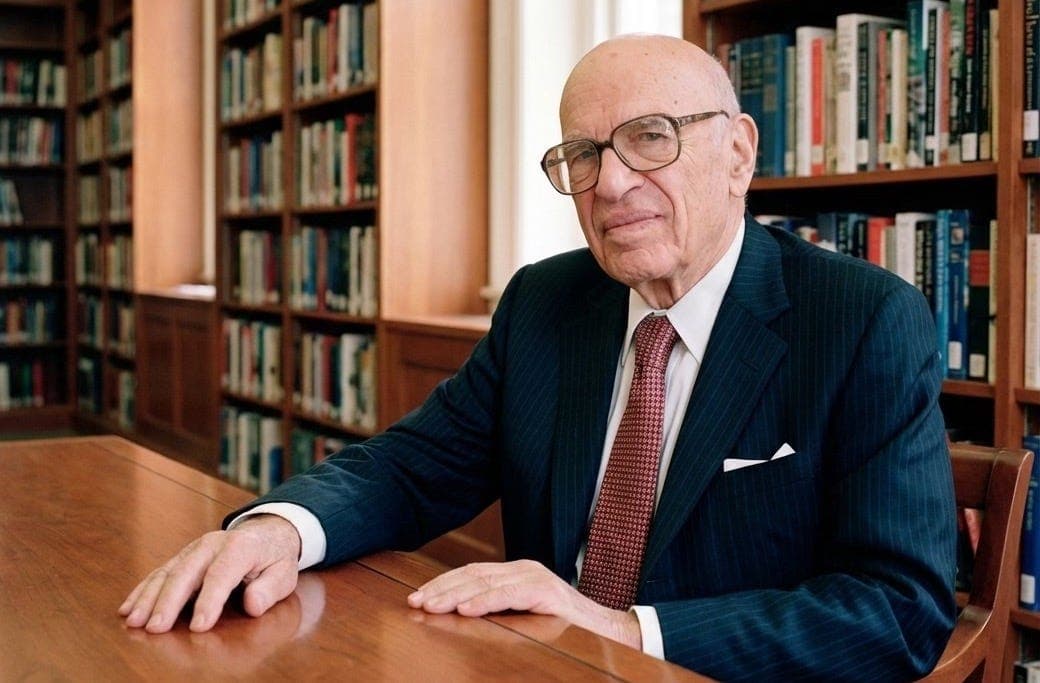
Walter Schloss
Value Investor
Fellow student of Benjamin Graham; lifelong friend and exemplar of disciplined value investing.
Biography
Walter Schloss (1916–2012) was a value investor who compiled one of the longest and most successful track records in American investing without a college degree, a research staff, or a computer. Born in New York City, he took Benjamin Graham's night course at the New York Institute of Finance in the mid-1930s and went to work at the Graham-Newman Corporation in 1946. There he met Warren Buffett, who arrived as a young analyst in 1954, and the two remained close friends for the rest of Schloss's life.
When Graham-Newman wound down, Schloss set up his own investment partnership in 1956. He ran it for 47 years, until 2002, assisted only by his son Edwin. The fee structure was as unusual as the setup: Schloss took not a dime unless his investors made money. The results were extraordinary. When Buffett profiled him in 1984, Schloss had compounded capital at 21.3% annually over 28¼ years, against 8.4% for the S&P 500. Over the full 47 years, the record dramatically surpassed the index — and it was built, Buffett emphasized, on roughly 1,000 mostly lackluster securities, with no single big winner carrying the outcome.
Schloss never visited the companies he owned, never sought inside information, and rarely even used "outside" information. He worked from a small office, looked up numbers in the manuals, sent for annual reports, and bought what was statistically cheap. Where Buffett evolved toward buying wonderful businesses at fair prices, Schloss remained a Graham purist to the end — mediocre businesses at excellent prices, dozens of positions at a time, widely diversified. He died in 2012, at 95.
Key Stories
The Sole Recommendation — In the 2006 letter, Buffett disclosed something he had rarely mentioned before: a full fifty years earlier, when a St. Louis family asked him for an honest and able investment manager, Walter Schloss was his sole recommendation. Buffett's admiration, he noted, was not hindsight — he had staked his own reputation on Schloss before Schloss had a record to point to.
The Superinvestor — In 1984, at Columbia Business School's celebration of the 50th anniversary of Security Analysis, Buffett delivered "The Superinvestors of Graham-and-Doddsville," his extended rebuttal of efficient market theory. Schloss was the first name on his list: 28¼ years, 21.3% annually, versus 8.4% for the S&P 500. Buffett was careful about the statistics: every winner he named was well known to him and pre-identified as a superior investor, the most recent identification made more than fifteen years earlier — he was not trawling thousands of records after the fact for lucky survivors. These investors had all learned from the same teacher, operated independently, held entirely different stocks — and all beaten the market year in and year out. That, he argued, was a methodology, not luck.
One File Cabinet, Then Four — The 2006 letter records the physical facts of the operation. Schloss's office contained one file cabinet in 1956; the number mushroomed to four by 2002. He worked without a secretary, clerk, or bookkeeper, his only associate being Edwin, a graduate of the North Carolina School of the Arts. Father and son never came within a mile of inside information and selected securities by certain simple statistical methods Walter had learned while working for Graham.
"We Try to Buy Stocks Cheap" — When Walter and Edwin were asked in 1989 by Outstanding Investors Digest to summarize their approach, Edwin answered: "We try to buy stocks cheap." Buffett savored the line: "So much for Modern Portfolio Theory, technical analysis, macroeconomic thoughts and complex algorithms."
A Thousand Lackluster Stocks — Buffett was careful to explain what Schloss's record was not. It was not a few brilliant picks. It was roughly 1,000 securities, mostly of a lackluster type, bought cheap and sold dear, decade after decade. Had millions of managers drawn stock names from a hat and merely copied Schloss's timing, Buffett wrote, the luckiest of them would not have come close to equaling the record.
Impact on Buffett
Exhibit A Against Efficient Market Theory — Buffett first publicly discussed Schloss's record in 1984, when efficient market theory was the centerpiece of investment instruction at most major business schools. The record forcefully contradicted the dogma — and the academy, Buffett observed twenty-three years later, responded by closing its eyes: to his knowledge, no business school teaching EMT made any attempt to study Walter's performance or what it meant for the theory. Schloss, meanwhile, went on overperforming. "After all," Buffett wrote, "if you are in the shipping business, it's helpful to have all of your potential competitors be taught that the earth is flat."
The Fee-Model Rebuke — Buffett placed the 2006 Schloss passage at the end of his long "Gotrocks" section on the cost of hyper-helpers — the 2-and-20 crowd that enriches managers regardless of results. Against that arrangement he set Schloss: a man who for 47 years took not a dime unless his investors made money, introduced simply as "one of the good guys of Wall Street."
Temperament Over Credentials — Schloss was Buffett's standing proof that successful investing does not require elite schooling, sophisticated tools, or access. It requires a sound framework and the discipline to apply it for decades. The misguided instruction of young minds in efficient market theory, Buffett noted dryly, had only made Walter's job easier by thinning the competition. He closed the 2006 profile with a characteristic twist of the knife: "Maybe it was a good thing for his investors that Walter didn't go to college."
Key Passages from Buffett's Letters
Walter never went to college, but took a course from Ben Graham at night... He looks up the numbers in the manuals and sends for the annual reports, and that's about it.
— The Superinvestors of Graham-and-Doddsville (1984)
Let me end this section by telling you about one of the good guys of Wall Street, my long-time friend Walter Schloss, who last year turned 90. From 1956 to 2002, Walter managed a remarkably successful investment partnership, from which he took not a dime unless his investors made money.
Walter did not go to business school, or for that matter, college. His office contained one file cabinet in 1956; the number mushroomed to four by 2002. Walter worked without a secretary, clerk or bookkeeper, his only associate being his son, Edwin, a graduate of the North Carolina School of the Arts.
When Walter and Edwin were asked in 1989 by Outstanding Investors Digest, "How would you summarize your approach?" Edwin replied, "We try to buy stocks cheap." So much for Modern Portfolio Theory, technical analysis, macroeconomic thoughts and complex algorithms.
It's safe to say that had millions of investment managers made trades by a) drawing stock names from a hat; b) purchasing these stocks in comparable amounts when Walter made a purchase; and then c) selling when Walter sold his pick, the luckiest of them would not have come close to equaling his record. There is simply no possibility that what Walter achieved over 47 years was due to chance.